A sac on the elbow, or what bursitis is
Contents
This post was prompted by a recent patient visit with a swelling on the elbow.
A soft, rounded “sac” on the back of the elbow is a common reason to see a doctor. Most often it is olecranon bursitis. Let us look at where it comes from, what you can do yourself and when you need to see a doctor without delay.
1. What elbow bursitis is
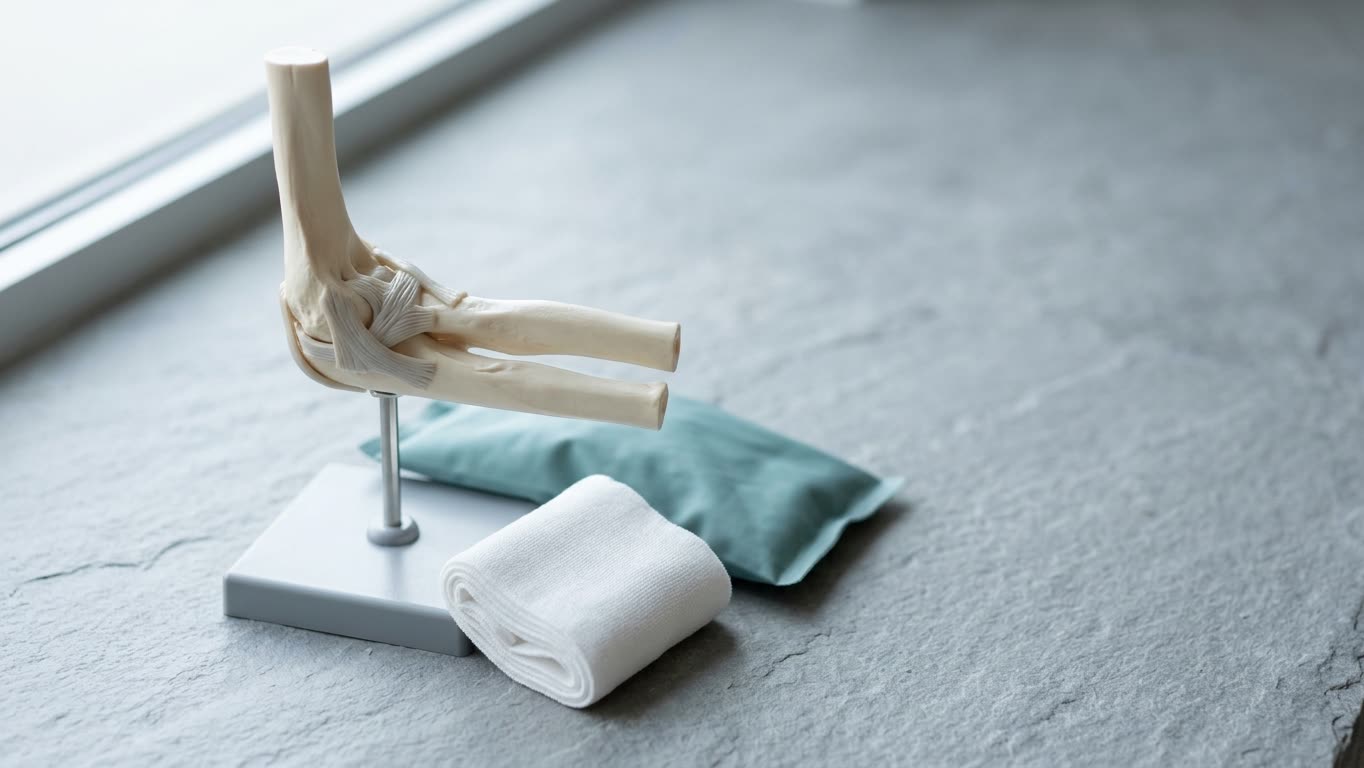
A bursa is a small, flat sac with a drop of fluid inside. The elbow bursa lies just under the skin over the bony point of the elbow (the olecranon) and lets the skin glide freely as you bend your arm. It has almost no protection, so it is easily injured, compressed or infected.
In bursitis, fluid collects in the sac, sometimes with inflammation, and a soft swelling appears on the elbow — anything from small to the size of a large egg.
Bursitis belongs to the disorders of the soft tissues around joints, together with tendinitis, enthesitis and periarthritis. These are among the most common reasons to see a rheumatologist: a study of an outpatient rheumatology practice found them in 37% of patients.
2. Who gets it more often
Elbow bursitis occurs in at least 10 people per 100,000 each year. About 80% of patients are men, most often aged 40–60.
The risk is higher with:
- a habit of leaning on the elbows — desk work (“student’s elbow”) and jobs with constant pressure on the elbow: miners, plumbers, gardeners, heavy manual work;
- long-term haemodialysis;
- a bony spur on the olecranon;
- according to a large study (more than 10,000 patients), age, excess weight, raised cholesterol and smoking.
3. What causes bursitis
- Constant pressure and minor injuries — the most common cause.
- A knock or a fall onto the elbow — blood may collect in the sac.
- Infection — germs get in through a graze, scratch or cut over the elbow. In most cases (73–90%, depending on the study) the cause is Staphylococcus aureus. Roughly one elbow bursitis in three is infectious.
- Gout and calcium pyrophosphate disease (pseudogout) — crystals are deposited in the sac, and the inflammation can look very much like an infection.
- Rheumatoid arthritis and other systemic diseases.
So bursitis is not only a “mechanical” problem. Sometimes gout or rheumatoid arthritis lies behind it, and then the underlying disease needs treatment.
4. What bursitis feels like
Non-infectious bursitis (from pressure or injury) is usually a soft, painless or slightly tender swelling. The skin over it is a normal colour and barely warm. People often notice the “lump” by chance.
Bursitis in gout starts suddenly: the elbow hurts, turns red and hot — as with an infection.
Infectious (septic) bursitis is usually painful, the skin is red and hot, and there is often a graze nearby. But the signs of infectious and non-infectious bursitis overlap a great deal:
| Sign | Infectious | Non-infectious |
|---|---|---|
| Tender to touch | 88% | 36% |
| Red skin | 83% | 27% |
| Warm skin | 84% | 56% |
| Graze or wound nearby | 50% | 25% |
| Fever | 38% | 0% |
Note that only a third of patients with an infection have a fever. A normal temperature does not rule out infectious bursitis.
How is bursitis different from arthritis of the elbow? With bursitis the elbow usually bends and straightens almost freely and without severe pain — it is the sac under the skin that is inflamed, not the joint itself. With arthritis, moving the elbow is painful and limited.
5. When to see a doctor urgently
- you have a fever;
- redness is spreading up the arm and the arm feels hot;
- the pain is severe and getting worse;
- there is a wound or graze over the swelling, or something is draining from it;
- the swelling is growing quickly;
- you have diabetes or a weakened immune system (for example, you take steroids, biologics or chemotherapy) — in that case see a doctor even if the signs are mild.
Do not pierce or open the “lump” yourself: it is very easy to introduce an infection.
6. How it is diagnosed
The diagnosis is usually made on examination. The doctor’s main task is not to miss an infection.
- Aspiration. If infection or gout is suspected, the doctor draws fluid from the sac with a thin needle. It is tested: the cells are counted, and the lab looks for bacteria (Gram stain, culture) and crystals. Aspiration also reduces the swelling. If the bursitis came from pressure and there are no signs of infection, the sac is not punctured without need: the needle itself can introduce an infection.
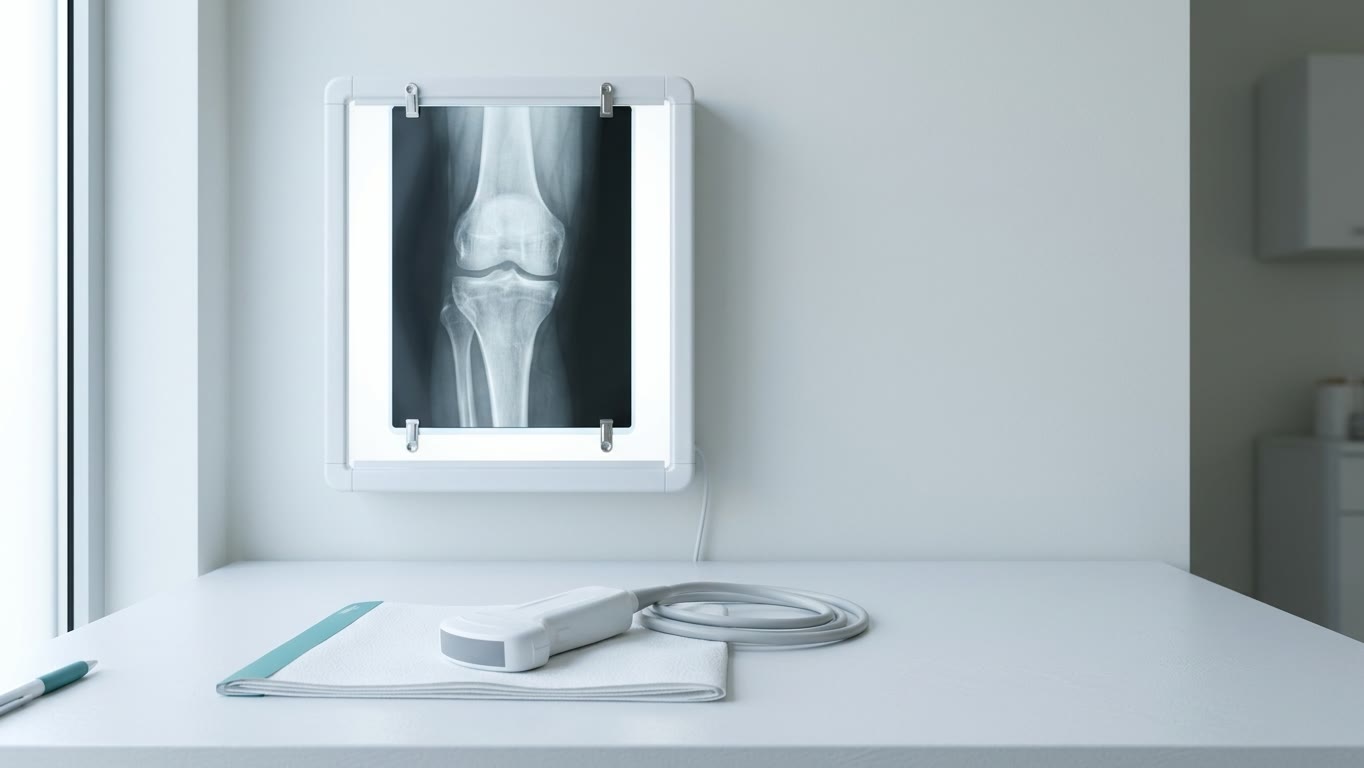
- Ultrasound confirms fluid in the sac, helps tell bursitis from inflammation of the tissue under the skin (cellulitis) and guides the needle precisely.
- An X-ray shows a bony spur, a foreign body or damage to the bone.
- Blood tests (white cell count, CRP, ESR) help, but on their own they neither prove nor rule out infection.
7. Treating non-infectious bursitis
Most cases settle within a few weeks without surgery or injections. What helps:
- not leaning on the elbow and protecting it with a soft pad;
- cold;
- an elastic (compression) bandage;
- a short course of non-steroidal anti-inflammatory drugs (NSAIDs) — agreed with your doctor, as they have contraindications.
A randomised trial in 90 patients compared three approaches: a bandage with NSAIDs, aspiration, and aspiration with a steroid injection. After 4 weeks the bursitis had resolved in 83%, 65% and 85% respectively — the difference was not statistically significant. With the steroid the swelling went down a little faster (on average in 2.3 weeks versus 3.2). But aspiration and steroid injection carry risks: infection, a non-healing sinus, thinning of the skin. That is why treatment starts with a bandage and NSAIDs, and an injection is kept for bursitis that does not settle, or for people who need to load the elbow at work or in sport.
8. Treating infectious bursitis
Infectious bursitis is treated with antibiotics that act on staphylococci, and the pus is removed from the sac — usually by repeated aspiration.
- In mild cases, antibiotic tablets are taken at home.
- With fever, spreading redness or feeling generally unwell, antibiotics are given intravenously, often in hospital.
- Most patients recover without surgery.
- If treatment does not help, the infection is severe or keeps coming back, the sac is removed surgically (bursectomy). About one patient in ten needs a repeat operation; the risk is higher with rheumatoid arthritis and diabetes.
Only a doctor chooses the drug and the length of the course. Do not start antibiotics on your own.
9. Can it be prevented from coming back?
Elbow bursitis often recurs. To lower the risk:
- do not lean on your elbows for long;
- use soft elbow pads at work and in sport;
- set up your workplace so that your elbow does not rest on a hard surface;
- clean grazes and scratches on the elbow;
- if the bursitis is linked to gout or rheumatoid arthritis, treat the underlying disease.
Disclaimer: This article is for information only and does not replace an examination by a doctor.
Sources
- Khodaee M. Common Superficial Bursitis. American Family Physician, 2017.
- Reilly D, Kamineni S. Olecranon Bursitis. Journal of Shoulder and Elbow Surgery, 2016.
- Kim JY et al. Randomized Trial Among Compression Plus NSAIDs, Aspiration, and Aspiration With Steroid Injection for Nonseptic Olecranon Bursitis. Clinical Orthopaedics and Related Research, 2016.
- Darrieutort-Laffite C et al. 2023 French Recommendations for Diagnosing and Managing Prepatellar and Olecranon Septic Bursitis. Joint Bone Spine, 2024.
- Baumbach SF et al. Prepatellar and Olecranon Bursitis: Literature Review and Development of a Treatment Algorithm. Archives of Orthopaedic and Trauma Surgery, 2014.
- Shemesh S et al. Risk Factors for the Development of Olecranon Bursitis. Journal of Clinical Medicine, 2024.
- Germawi L et al. Factors Associated With Revision Surgery for Olecranon Bursitis After Bursectomy. Journal of Shoulder and Elbow Surgery, 2021.
- Vanhoof J, Declerck K, Geusens P. Prevalence of Rheumatic Diseases in a Rheumatological Outpatient Practice. Annals of the Rheumatic Diseases, 2002.
Recognise your symptoms?
An article does not replace an in-person consultation. Get in touch to book an appointment — we will go through your situation in person. Consultations are held in Russian.
Get in touch to book